Health & Safety Policy for Removals Companies
 This health and safety policy sets out the commitment of a removals company to protect staff, customers and property while delivering removal services. It outlines responsibilities, expectations and practical controls that every removal firm and moving company should adopt. The policy is designed to be proportionate and pragmatic so that teams of all sizes can apply safe systems of work without unnecessary complexity. The focus is on prevention, competent supervision and continual improvement across all operations.
Every removals business must establish clear roles and responsibilities for safety. Managers should ensure risk assessments are current and that teams understand their duties. Staff, including drivers and loaders, must follow safe working procedures and report hazards promptly. Contractors and agency movers engaged by the removal company are expected to meet the same standards. Leadership and accountability are essential to maintain a robust safety culture within any removal company.
 Risk assessment and control are core elements of a removal company's safety approach. Practical controls include safe manual handling techniques, correct use of lifting aids, stable stacking of items, vehicle loading constraints and safe operation of tail lifts. A clear process for assessing client premises and route hazards must be in place before work begins. The policy encourages regular toolbox talks and briefings to reinforce safe behaviours and keep moving company teams focused on risk reduction.
Operational Safety Measures
Vehicles, equipment and protective gear are vital for safe removals. The company must ensure that all vans and moving trucks are well maintained, inspected and roadworthy. Drivers should complete pre-shift vehicle checks and report defects immediately. Provision of appropriate PPE???gloves, boots, high-visibility clothing and back supports where applicable???helps reduce injury. Training in safe use of equipment such as trolleys, ramps and tail lifts is mandatory for those operatives who use them.
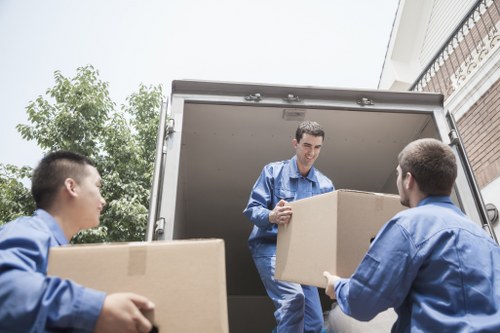 Safe handling practices are emphasised through competent training and assessed practical sessions. The policy requires recorded induction and refresher training for all staff to maintain high standards in manual handling, ladder safety and working at height when handling bulky or heavy items. A simple checklist and demonstration of correct lifting technique are practical ways to reduce musculoskeletal injuries in removal operations. The paragraph below highlights controls in a concise list:
- Carry out pre-move risk assessments and site surveys;
- Use mechanical aids and team lifts where needed;
- Ensure secure, balanced loading and correct restraint of items in transit;
- Maintain clear communication between drivers and loaders.
Incident Management and Welfare
Incident reporting and investigation are important parts of managing health and safety. All accidents, near misses and unsafe conditions must be reported promptly so the removal company can take corrective actions and prevent recurrence. First aid provision on-site and in vehicles should be appropriate to the size of the crew and nature of the work. Workers must never feel discouraged from reporting issues; a supportive reporting process improves safety for everyone.
 The welfare of operatives during relocations is a priority. Adequate rest breaks, hydration and safe working hours reduce fatigue-related risks for moving teams. Consideration for weather conditions, secure parking and safe access to properties must be included in planning. Managers should monitor workloads and adjust staffing for large or complex moves to maintain safe working practices throughout the job.
![A woman with short dark hair, wearing a light grey jacket and smiling, stands in the foreground of an indoor residential setting during a house move. Behind her, a man with short dark hair and a beard, dressed in a white t-shirt, is slightly out of focus as he lifts a cardboard box. The background shows a collection of stacked cardboard boxes of various sizes, some taped and labeled, in a room with neutral-colored walls and a bright, natural light source. The scene appears to take place inside a house or flat, possibly in a town or city center, with a focus on a professional house removal process. The environment suggests an organized move with cleaning and packing materials visible, supported by the presence of a removal van partially seen outside through an open door or window. The overall setting demonstrates a typical residential packing activity, aligned with removals services in the UK, suitable for clients in the area around [POSTCODE]. The scene is well-lit, with a tidy and professional atmosphere, reflecting a careful and efficient removals process.](/pub/_photos/removals/f1395440576.jpg) Review and continuous improvement underpin a strong health and safety policy for removal companies. Regular audits, monitoring of key performance indicators and consultation with staff help identify opportunities to strengthen controls. The policy should be reviewed at least annually or after significant incidents or operational changes. By embedding safety into everyday practice, removal firms, movers and relocation teams can deliver services that protect people and property while building trust through consistent, safe performance.
Review and continuous improvement underpin a strong health and safety policy for removal companies. Regular audits, monitoring of key performance indicators and consultation with staff help identify opportunities to strengthen controls. The policy should be reviewed at least annually or after significant incidents or operational changes. By embedding safety into everyday practice, removal firms, movers and relocation teams can deliver services that protect people and property while building trust through consistent, safe performance.